

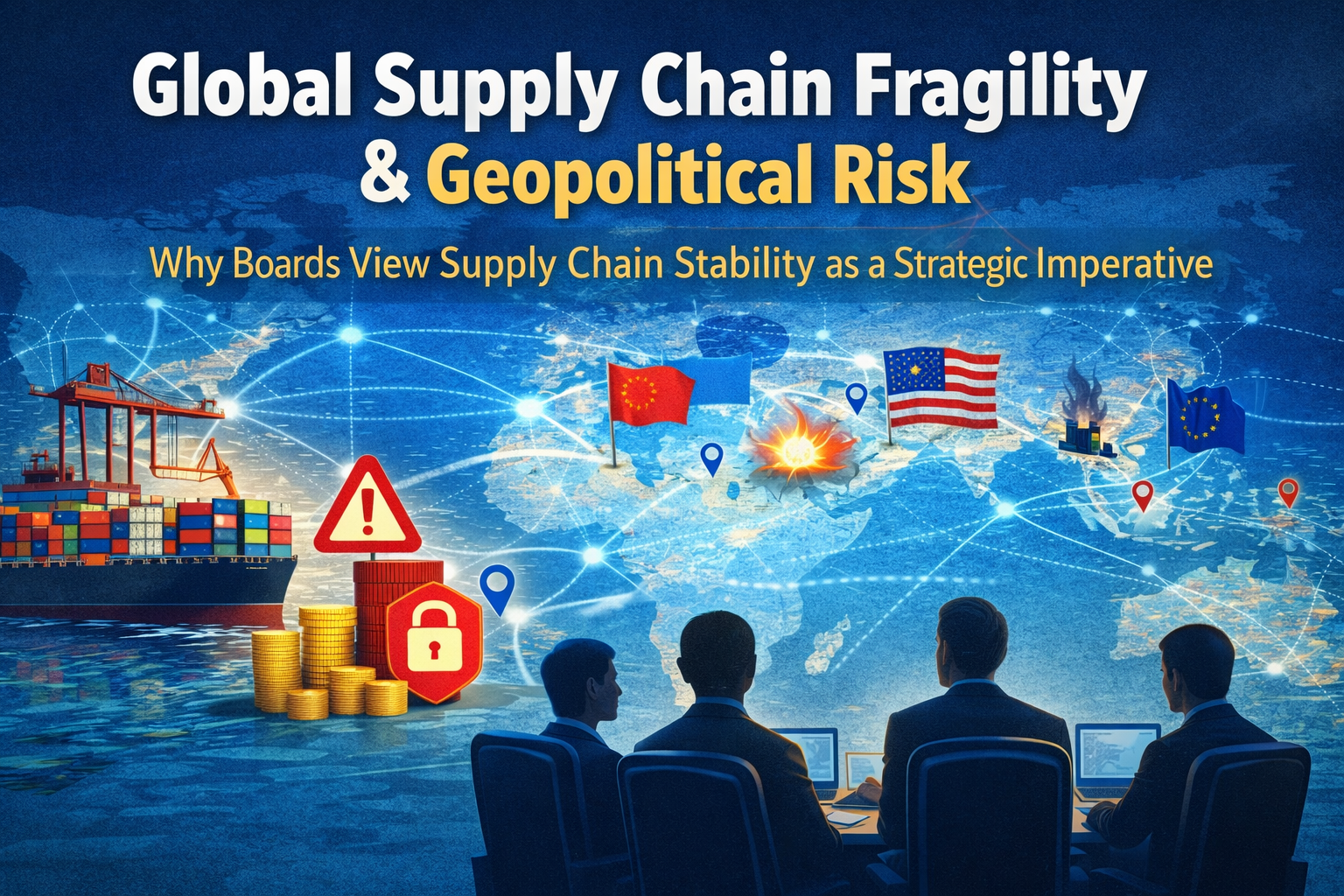

Global Supply Chain Fragility & Geopolitical Risk
Why Boards View Supply Chain Stability as a Strategic Imperative

Modern supply chains are more interconnected and more fragile than ever before. Boards are deeply concerned because disruptions—whether caused by geopolitical tensions, sanctions, trade conflicts, or regional instability—have become more frequent and less predictable.
Even minor disruptions can escalate quickly. A conflict in one region can affect shipping routes on the other side of the world. Sanctions or tariffs can instantly change supplier viability. Boards must constantly evaluate the cost of alternative suppliers, nearshoring options, or diversification strategies. Long-term supplier relationships that once felt stable now require geopolitical risk assessments.
Compliance risk is another major board concern. As countries introduce new regulations around technology transfer, data protection, export controls, and national security, companies must ensure their supply chains meet complex legal requirements. Non-compliance can lead to fines, reputational damage, or operational shutdowns.
Boards also worry about the cost impact. Supply chain adjustments—dual sourcing, reshoring, safety stock increases—frequently require significant investment. These decisions must be made under uncertainty, adding to board anxiety.
When can boards stop worrying?
Boards can begin to relax when geopolitical tensions stabilize across key regions affecting their industry. They should watch for consistency in trade policy, predictable regulatory environments, and long-term diplomatic agreements.
Boards can also stop worrying once their companies shift from reactive to proactive supply chain management. This includes:
- Diversified suppliers across regions
- Reduced dependency on high-risk jurisdictions
- Real-time supply chain visibility tools
- AI-enhanced logistics forecasting
When an organization can anticipate disruptions and pivot quickly, supply chain fragility becomes manageable.
Ultimately, boards gain peace of mind when resiliency becomes a competitive advantage rather than a vulnerability.