
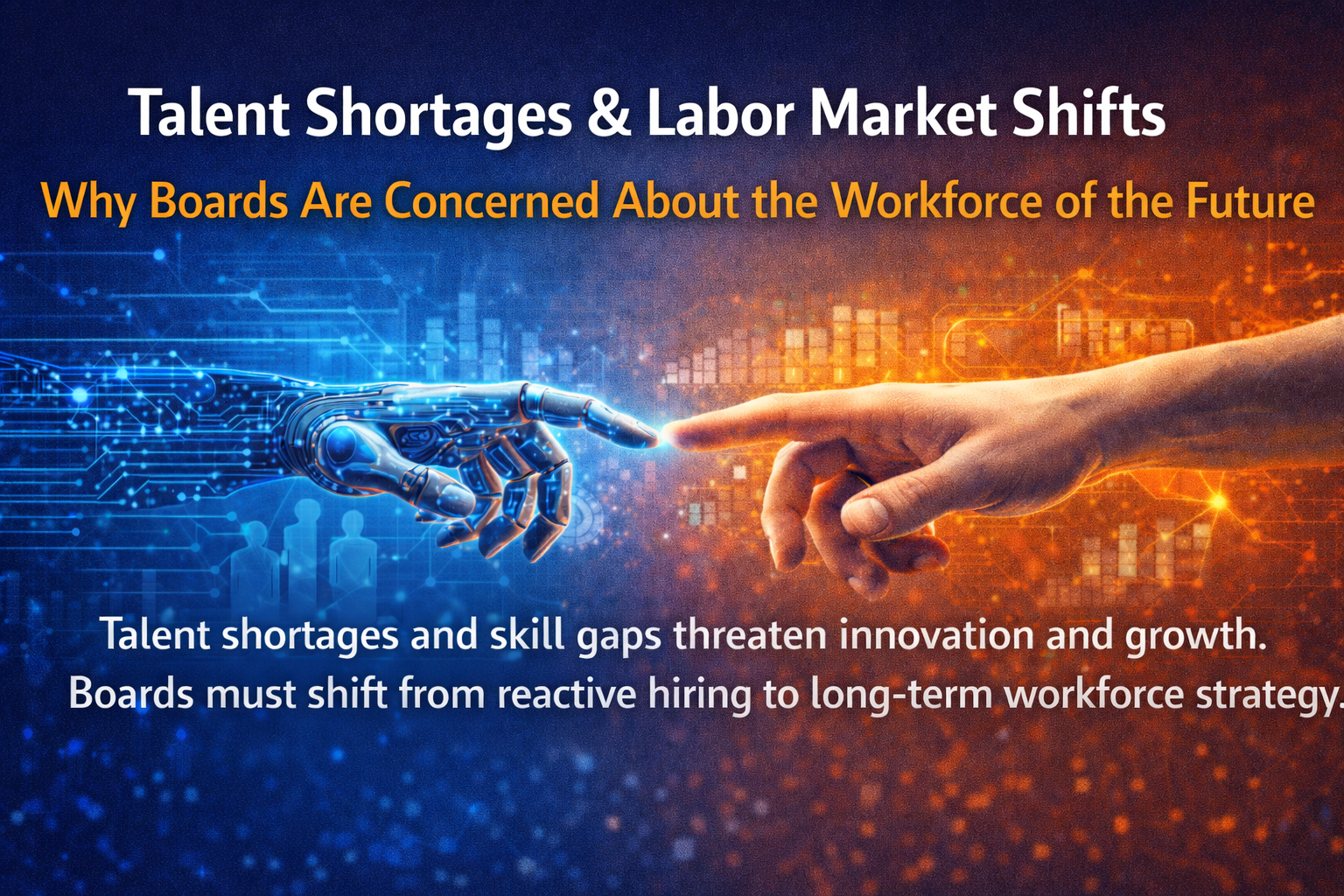

Talent Shortages & Labor Market Shifts
Why Boards Are Concerned About the Workforce of the Future
Even though job markets appear strong, boards are increasingly worried about talent shortages. The challenge isn’t the number of workers—it’s the availability of workers with the right skills. AI, digital transformations, cybersecurity demands, and advanced manufacturing technologies create a need for expertise that the labor market cannot supply fast enough.
Boards worry because talent gaps directly impact innovation, operational efficiency, and competitive advantage. Companies cannot advance transformation initiatives without the right people. Wage pressure also remains high, especially for technical positions. Organizations must compete aggressively not only with industry peers but also with tech firms and global employers offering remote work.
Retention is another issue. High burnout, shifting employee expectations, and remote/hybrid work tensions create instability. Leaders must balance flexibility with accountability, culture with productivity, and engagement with performance measurement. Boards understand that workforce issues affect everything from brand reputation to long-term strategy.
Succession planning adds another layer of concern. As senior leaders retire, the pipeline of ready-now talent is shrinking. Companies risk losing institutional knowledge without clear development pathways for future leaders.
When can boards stop worrying?
Boards can relax once the organization transitions from reactive hiring to long-term talent strategy. That includes:
- Strong internal training and upskilling programs
- Clear leadership development pipelines
- Partnerships with universities or technical programs
- Effective retention strategies tied to culture, not just compensation
Boards also worry less when technology solutions—particularly AI—begin reducing dependency on scarce human skill sets. If AI automates certain tasks, supports decision-making, or enhances worker productivity, the talent shortage becomes less critical.
Finally, boards can stop worrying when workforce stability metrics improve: lower turnover, higher engagement, and consistent performance across teams. A company that understands how to attract, develop, and retain talent will outperform competitors in any market environment.